
Regenerative medicine marketing: how clinics convert high-ticket inquiries
A playbook for regenerative medicine marketing at clinics: reply in minutes, nurture each inquiry, offer a branded portal, and keep claims educational.
Regenerative medicine marketing works when a clinic treats every high-ticket inquiry like a short decision window, not a brochure download. Owners and operators convert more of the leads they already buy by replying within minutes, keeping the full conversation in one CRM, and offering a branded link patients can explore from home before they travel. Ads and SEO create demand, while response speed, personal nurture, reviews, and careful claims decide who books.
What does regenerative medicine marketing mean for regenerative medicine clinics?
For a regenerative medicine clinic, it is the full path from the first search or ad click to a booked consult and a prepared travel patient. That path is fragile: patients often compare three or four clinics the same evening, and a generic email with a long PDF quote is the pattern many clinics still run.
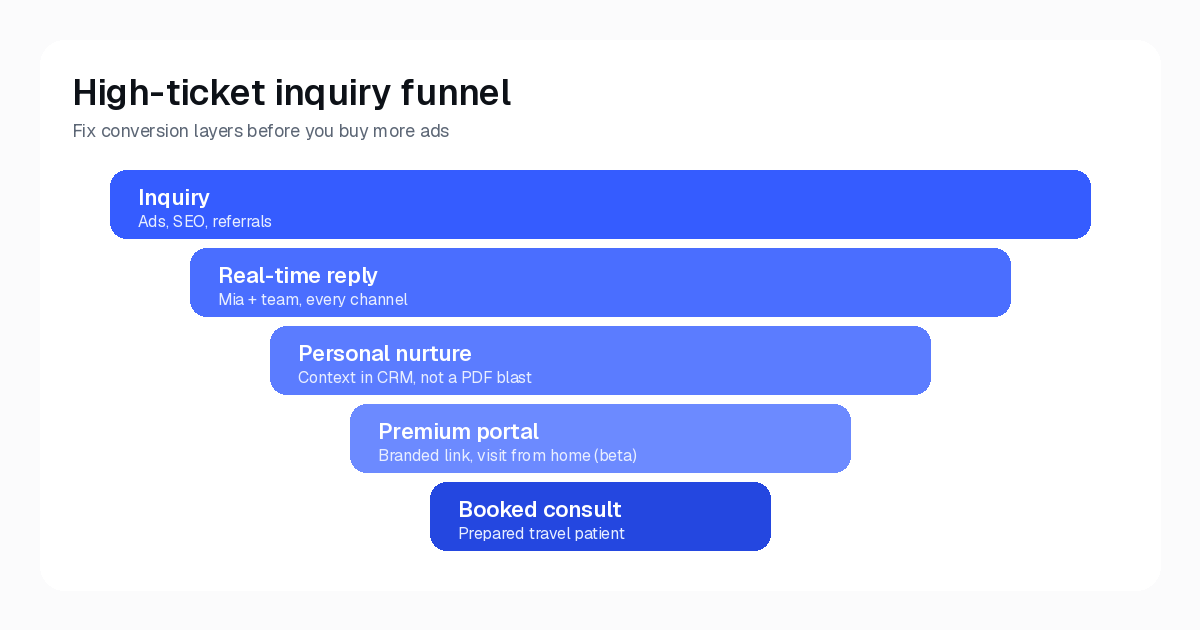
A useful way to split the work:
| Layer | Job | Common failure |
|---|---|---|
| Demand | Ads, SEO, referrals, and partnerships bring inquiries | Spend rises while conversion stays flat |
| Response | First reply on phone, SMS, WhatsApp, email, form, or social | Hours or days of silence after hours |
| Nurture | Qualify, educate, and personalize the next step | One blast PDF for every lead |
| Branded portal | A link so patients can explore the visit from home | A basic follow-up after a high-ticket consult |
| Trust | Reviews, proof, and clear educational content | Claims that create skepticism |
| Aftercare | Check-ins, reviews, and referrals | Patients go quiet after treatment |
Partnerships count as demand too. If a facilitator sends you patients who travel for treatment, our guide to working with a medical tourism facilitator covers vetting and clean referral handoffs.
If you only improve demand, you pay more for the same leaky system. Strong regenerative medicine marketing fixes the conversion layers first, then scales spend.
Why do high-ticket regen inquiries go quiet?
They go quiet because the decision is emotional, expensive, and crowded, and most clinics reply too late or too generically. A patient researching a high-ticket protocol often messages Clinic A at 8:12pm, Clinic B at 8:14pm, and Clinic C at 8:20pm. Whoever answers with a clear next step starts the relationship.
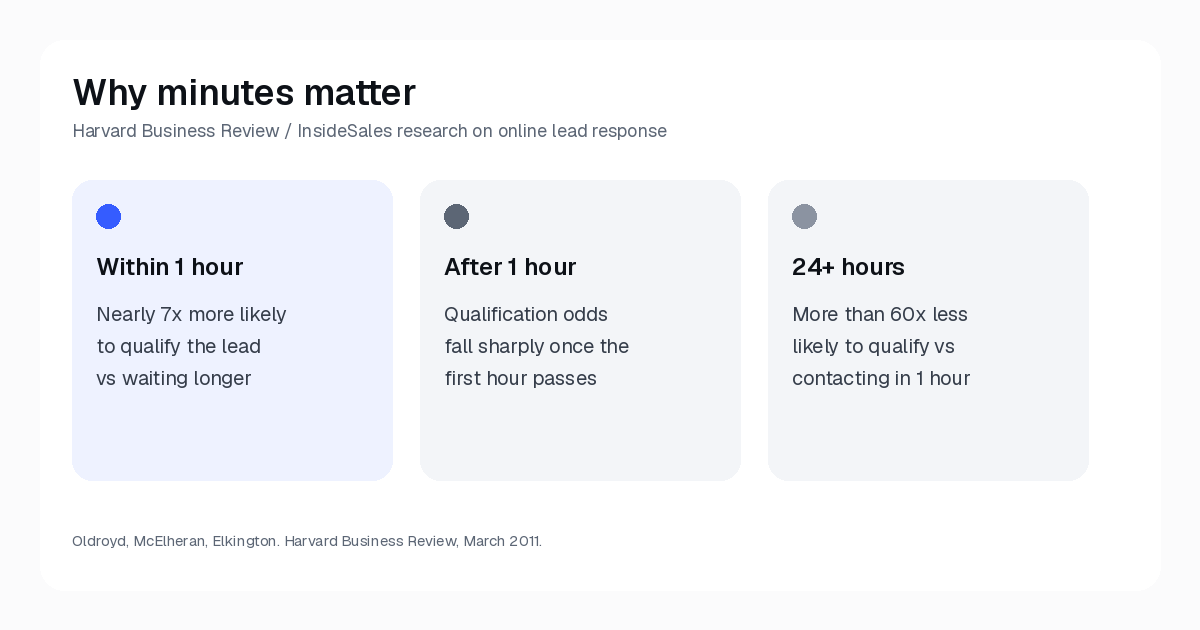
Research backs the urgency. In a Harvard Business Review analysis of web-generated leads, firms that tried to contact a potential customer within an hour were nearly seven times as likely to qualify the lead as those that waited even an hour later, and more than 60 times as likely as companies that waited 24 hours or longer (Oldroyd, McElheran, and Elkington, March 2011). That study measured qualification odds, not a fixed percent who book with whoever answers first, so treat it as evidence that minutes matter.
Typical quiet-lead causes inside regenerative medicine clinics:
- After-hours and weekend form fills sit until Monday.
- One coordinator owns every channel in their head, so nothing is shared.
- The first reply is a long PDF with no personal context.
- Follow-up stops after two touches even though the decision takes weeks.
- No one knows which leads are hot, warm, or not a fit because context is scattered.
Marketing did not fail when that happens. The handoff from marketing into patient coordination failed.
How should regenerative clinics handle speed-to-lead?
Answer every new inquiry within minutes, on the channel the patient used, with a short personal message that asks two or three qualifying questions and offers a concrete next step. Travel patients decide early who feels trustworthy. Coverage matters more than a perfect script.
A practical response standard:
- Own every inbound channel: website form, phone, SMS, WhatsApp, email, Instagram, Facebook, and referral intros.
- Set a minutes-level first-reply goal, including real-time coverage after hours and on weekends.
- Keep the first message short: thank them, confirm you help patients who travel, ask about goals and timing, and offer a next step.
- Log every conversation in one shared CRM so the next teammate never asks the patient to repeat themselves.
- Text from a shared clinic number, not personal phones, and offer WhatsApp to patients who prefer it. Our guide to patient texting software covers consent, opt-out, and after-hours replies.
- If software drafts the reply, keep a person on the team who can approve what goes out. The message should still sound like the clinic.
A minutes-level goal only counts if someone is actually watching the inbox at 8:20pm. The same short reply should be possible on a Sunday as on a Tuesday morning.
If you are not changing tools yet, you can still win with an after-hours rota, shared inbox rules, and a first-reply checklist next to every coordinator screen.
What does personal nurture look like instead of a generic PDF?
Personal nurture means the patient gets a message that reflects their goals, timeline, and logistics, then a quote or plan that feels written for them. The common failure is a long PDF with no sign that anyone read the inquiry. High-ticket care with a basic digital follow-up creates doubt.
Replace the PDF blast with a short sequence:
- Confirm and qualify. Goals, travel timing, companions, and what they have already tried.
- Educate without overclaiming. How you evaluate candidates, what the visit week looks like, and what travel support includes.
- Personalize the next asset. A short video from the doctor or advocate, a one-page summary, or a tailored quote beats a long generic packet.
- Send a branded link. Let the patient explore quote, preparation, documents, and schedule from home.
- Stay present across the decision window. High-ticket cycles often take weeks. Leave room for human judgment. If you are choosing tools to run this sequence, our patient engagement software guide has an evaluation checklist.
- Hand off cleanly to prepare. Keep the same story into documents, travel, schedule, and check-ins.
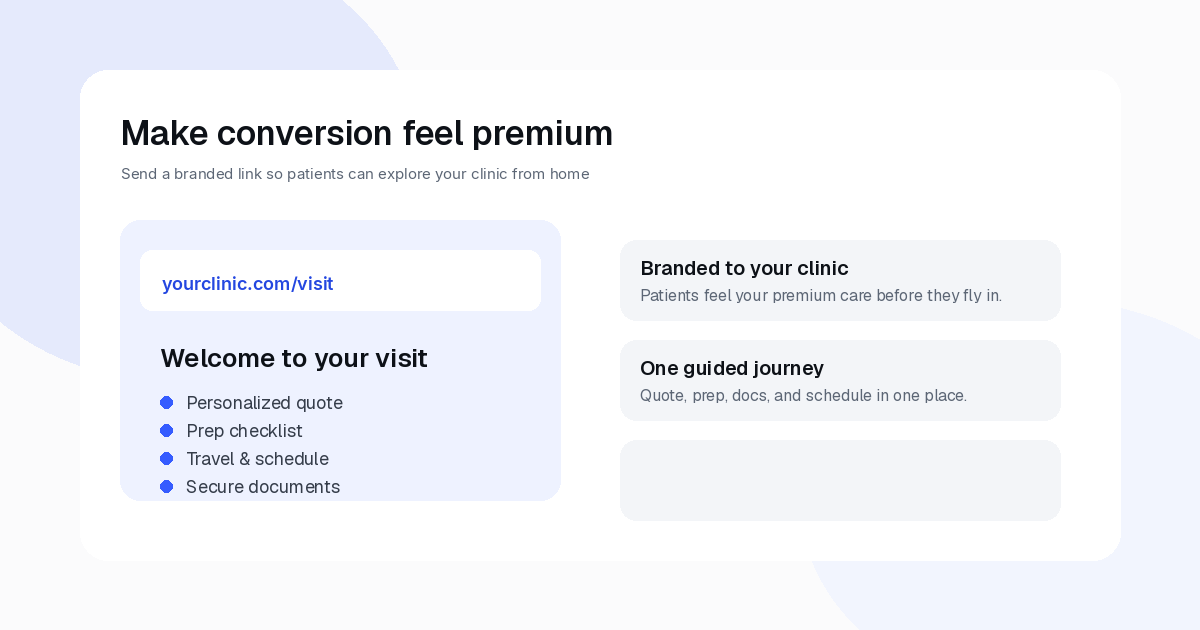
That link is how follow-up starts to feel as considered as the care. Instead of another attachment, send one branded place the patient can open from home before they book travel. Once a consult is booked, the next job is getting the patient there. Our guide on how to reduce patient no shows covers confirmation cadences, visit prep, and same-day recovery.
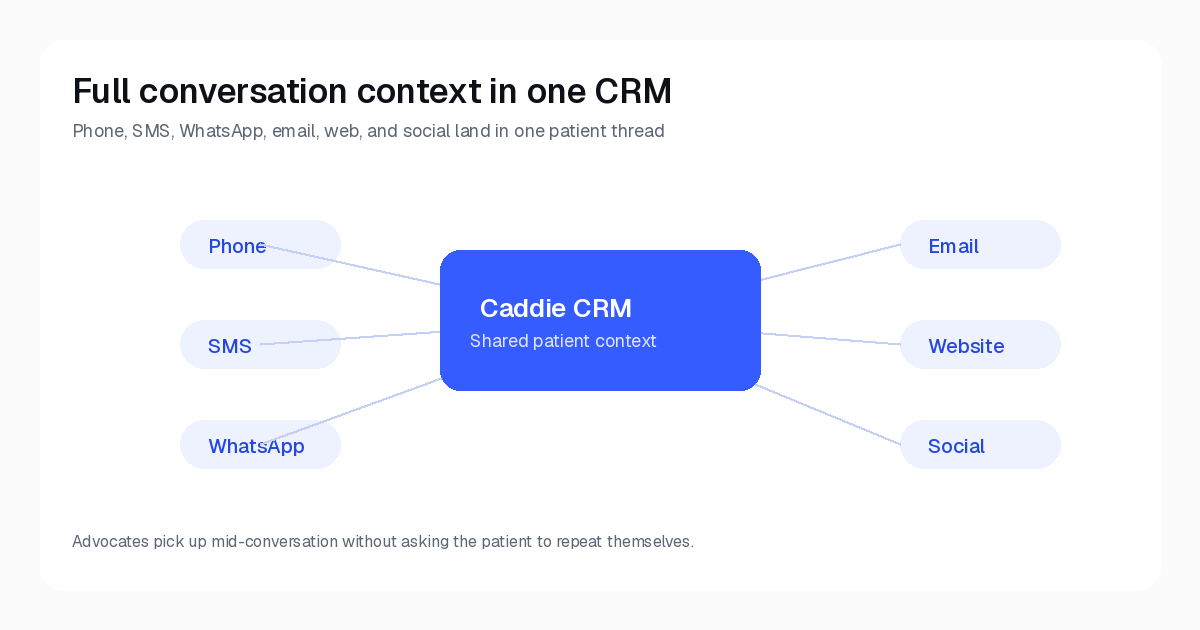
None of that works if context is lost. The CRM should hold the full conversation across channels, so the overnight reply, the advocate's morning call, and the clinician's note live on one patient record. When the next person picks up the thread, the patient should not have to start over. If you are choosing that system, our guide to a HIPAA compliant CRM covers what to check before patient data goes in.
That shared record is also the backbone of patient relationship management across consult, travel, treatment, and referral.
How should clinics talk about regenerative treatments in public marketing?
Talk about process, evaluation, experience, and education. Do not invent clinical outcomes. Patients have seen miracle language online, and overclaiming makes serious buyers skeptical.
Safe public-content habits:
- Describe who you help at a high level without promising a cure, a reversal, or a specific result.
- Explain the consult process, preparation, and travel support.
- Avoid absolute words such as cure, guaranteed, or FDA-approved stem cell treatment unless the medical and legal team cleared that exact claim.
- Keep prices out of cold ads, social posts, and ungated pages when pricing is shared on a consult.
- Let marketing earn the conversation. Let clinicians decide candidacy.
If a sentence would sound wrong coming from a careful medical director, it does not belong on an ad or the homepage.
How do reviews and referrals multiply regenerative medicine marketing?
Reviews and referrals turn treated patients into proof for the next traveler comparing clinics. Out-of-state and international patients often check reviews before they book a call, so post-treatment follow-up is part of marketing.
A simple review system for regenerative medicine clinics:
| Step | Owner | Timing |
|---|---|---|
| Mark a clear milestone | Clinical or advocate lead | For example, the first post-visit check-in is complete |
| Send a personal ask | Patient advocate | Within a few days of a good milestone |
| Make the path easy | Operations | A direct link to Google or the review sites you prefer |
| Capture a testimonial with consent | Marketing | A short video or quote the patient has approved |
| Close the loop on referrals | Advocate team | Thank the patient, track the referral, and follow up on the new inquiry |
Keep every review real. The FTC's rule on consumer reviews and testimonials, in effect since October 2024, bans fake reviews and bans offering incentives in exchange for reviews that express a particular sentiment. Asking every patient for an honest review is fine. Offering a reward only for five stars is not.
Build the ask into the journey instead of hoping patients remember you months later. A personal request, sent at a defined milestone, with one clear link, is the whole system.
What weekly regenerative medicine marketing system should a regenerative medicine clinic run?
Run a simple weekly loop that protects conversion first, then improves demand.
Monday: pipeline hygiene. Review new inquiries, unanswered threads, and stalled high-intent leads in the CRM.
Daily: speed standard. Measure median first-reply time by channel, including nights and weekends.
Midweek: nurture quality. Spot-check recent first replies and quotes, and check whether hot leads received a branded link.
Weekly: trust assets. Refresh one educational page without outcome promises, and request reviews from patients who hit the milestone.
Monthly: channel math. Track cost per inquiry and cost per booked consult, not vanity traffic.
Creative tests work better on top of a clinic that answers fast, keeps full CRM context, and gives patients a clear place to explore the visit from home.
What should you fix first if conversion is the bottleneck?
Fix first-reply coverage, then personalize the second touch with a branded link, then install a review ask. Only then raise ad spend.
A 30-day order that fits most regenerative medicine clinics:
- Map every inquiry channel and name who owns nights and weekends.
- Put real-time reply coverage in place, including after hours, with a person who can approve any message software drafts.
- Replace the default PDF send with personal nurture plus a branded link patients can open from home.
- Capture every conversation in one CRM so leads stop living in private message threads.
- Define one post-treatment milestone and a review or referral ask.
- Audit public pages and ads for overclaims.
- Revisit paid acquisition once reply time and consult show rates stabilize.
You do not need a bigger content calendar to start. You need fewer dropped conversations and a follow-up experience that matches the care from the first reply.
How can software help a regenerative clinic put this into practice?
Software helps when it covers the must-haves above: a fast first reply, a CRM that keeps the full conversation, a branded link patients can open from home, and a steady review ask after treatment. Caddie is one example: the AI Operating Platform for Regen Clinics, which brings together a CRM, Mia, our AI Patient Coordinator, available 24/7, the protocol builder, and a branded Patient Portal.
Mia, our AI Patient Coordinator, responds in real time on phone, SMS, WhatsApp, email, the website, and social, in English or Spanish, then qualifies, schedules, and follows up by text, email, and phone until the consult. A person on the team can approve what goes out, so the reply still sounds like the clinic. That is the minutes-level coverage from the speed-to-lead section, including nights and weekends.
The Patient Portal is the branded link in the nurture sequence. Patients open it from home for a personalized quote, preparation, documents, travel logistics, and the schedule. It is live and rolled out hands-on with each clinic.
The CRM holds the full patient context across those channels, so Mia's overnight reply, the advocate's morning call, and a clinician note stay on one record.
Rio, our Post-Treatment Care Advocate, handles the aftercare layer: check-ins, doctor follow-ups, review requests, and referral asks on a schedule the clinic sets.
Across ResCore, Optimal Health, and CMF Surgeons, average speed-to-lead went from 1.5 days to 5 minutes, and conversion rate improved 71% on average.
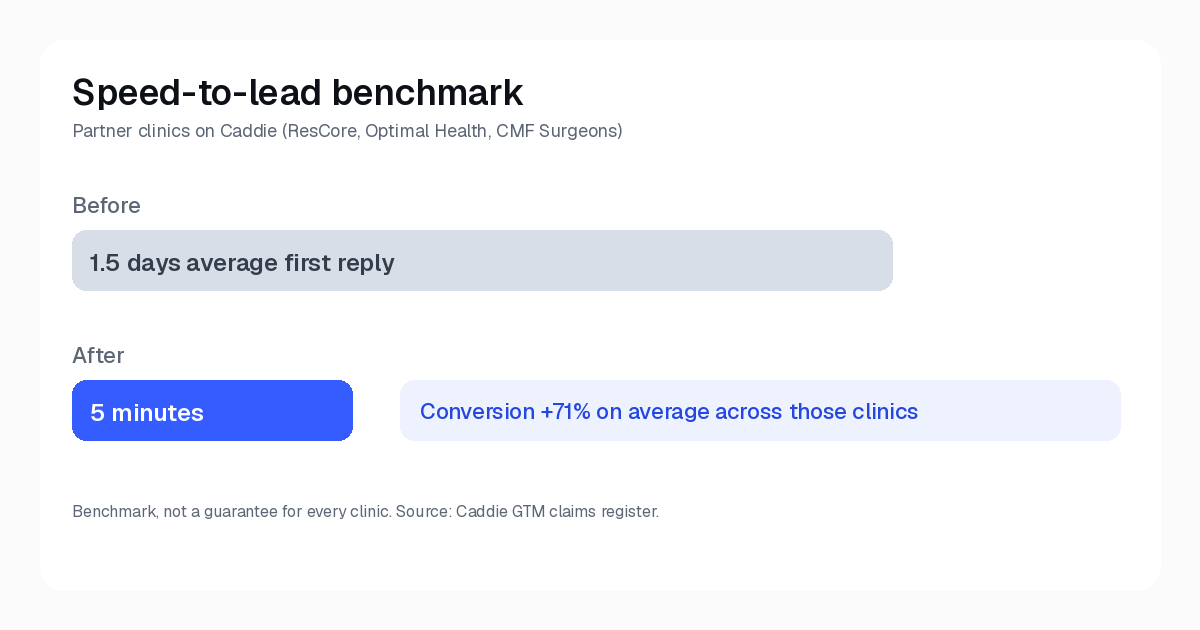
Patient referrals are up 25% and reviews and testimonials up 75%, across 3 clinics using the Patient Portal. Treat both sets of figures as examples from clinics already running this follow-up, not as a promise that every practice will see the same change.
Frequently asked questions
What is regenerative medicine marketing for a regenerative medicine clinic?
It is the system a clinic uses to attract, respond to, nurture, and convert patients who travel for high-ticket regenerative protocols. It covers ads and SEO, but the biggest gains usually come from speed-to-lead, personal follow-up, a branded link patients can explore from home, reviews, and clear educational content that does not overclaim outcomes.
Why do regenerative clinics lose inquiries even with steady ad spend?
Most high-intent leads shop several clinics the same night. If the first reply takes hours or days, or if the clinic sends a long generic PDF, the practice that feels personal and responsive usually wins. Ads create the inquiry. Response speed, nurture, and a clear follow-up experience decide conversion.
What should regenerative medicine marketing never claim?
Never claim that a treatment cures, heals, reverses, or guarantees a condition or outcome. Keep public marketing educational, cite what you can support, and leave clinical promises to the medical team under their own rules. Never write, buy, or script fake reviews either: the FTC rule on consumer reviews bans fake or false reviews and bans incentives conditioned on a particular sentiment, such as five stars. Overclaiming damages trust and can trigger ad or regulatory problems.
How fast should a regenerative clinic answer a new inquiry?
Answer within minutes whenever you can, including after hours. Travel patients often message several clinics in one sitting. A coordinator workflow that responds in real time, with a person able to approve messages, plus a CRM that keeps full context, beats a delayed brochure email.
How does a branded portal help convert high-ticket patients?
A branded link lets patients explore the clinic from home: a personalized quote, preparation, documents, and visit logistics in one guided place. That experience supports conversion before they travel. It works best when the CRM already holds the full conversation, so what the patient opens matches what they were told.
See Caddie built around your clinic
Book a free call and we’ll show you how leading regenerative clinics convert more patients with Caddie.
Book a free demo